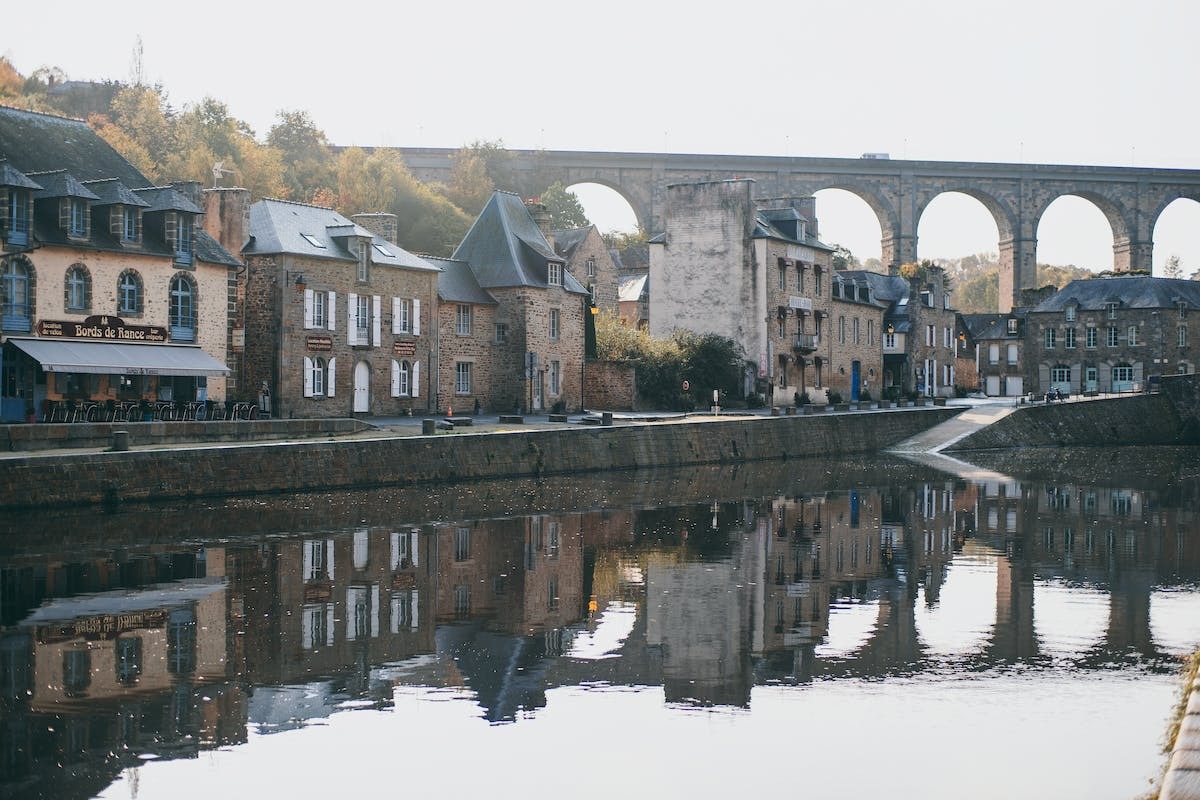
In the landscape of Brittany, Nantes stands out as a significant city, caught between a rich history and contemporary debates. Located in the west of France, it is the cradle of medieval fortifications and the gentle melody of Breton. Its belonging to Brittany is the subject of endless controversies. Some assert its Breton origins, while others contest this claim, considering it a distinct entity. This debate about its identity has deeply rooted implications in the politics, economy, and culture of the region, making Nantes a focal point in the landscape of Brittany.
Brittany’s Geography: An Influential Context
The issues surrounding Nantes’ presence in Brittany are numerous and complex. The debate over Nantes’ belonging to Brittany, often summarized by the term ‘Nantes Brittany or not’, raises identity questions deeply rooted in history and culture. On one side, those who support its integration highlight the historical links between Nantes and Brittany. The city was once the capital of the Duchy of Brittany and still carries a significant part of its Breton heritage today. Its cobbled streets and half-timbered houses remind us of this ancestral belonging.
However, other arguments oppose this inclusion. Some argue that Nantes has followed a distinct economic development, both industrially and demographically, which sets it apart from other Breton cities. Its geographical location is also debated: situated in the southeast of the traditional Breton territory, some believe it is culturally closer to the neighboring Pays de la Loire.
This thorny question has a direct impact on various socio-political and economic aspects. For example, administrative decisions regarding the distribution of regional competencies may be influenced by this complex territorial issue.
In this uncertain context regarding its official status in the current administrative region, it becomes interesting to consider the future prospects for Nantes and for Brittany as a whole.
While the debate remains open regarding the definitive inclusion of Nantes as an undisputed member of the Breton region, it is certain that history and geography will continue to fuel lively discussions on the subject. The diversity of opinions reflects the cultural and historical richness of this unique region.
Beyond the debate, Nantes remains a dynamic city that has managed to forge its own identity over the centuries. Its economic and cultural influence far exceeds regional borders. Regardless of the final decision regarding its belonging to Brittany, Nantes will continue to be a major player in the French landscape, thus contributing to the evolution of its geography and history.

Nantes in Brittany: Crucial Issues
The question of whether Nantes should be included in the Brittany region has long been at the heart of discussions. The arguments in favor of this inclusion are numerous and varied. Some emphasize the close historical ties between Nantes and Brittany, dating back to the time when the city was the capital of the Duchy of Brittany. They highlight the rich Breton heritage that still exists today in the cobbled streets and half-timbered houses of Nantes.
Others argue that culturally, Nantes shares many similarities with the rest of Brittany. The Breton language is taught and preserved there, thus testifying to a common identity. Folk and music festivals regularly celebrate Breton traditions throughout the city.
From an economic perspective, some argue that integrating Nantes would enhance the tourist appeal of the Brittany region. Indeed, due to its strategic geographical location on the Loire estuary, Nantes benefits from a developed river network that would allow for better connectivity between different Breton cities.
Despite these arguments in favor of its inclusion, there are also voices that firmly oppose this idea. These opponents argue that Nantes has followed a distinct development compared to the rest of Brittany, both industrially and demographically. According to them, this creates a significant difference that justifies its current status.
Some also point out that Nantes is culturally closer to the neighboring Pays de la Loire, particularly due to its regional economic role and geographical proximity to these lands. They emphasize that the economic and social dynamics unique to Nantes differ from those of the rest of Brittany.
This complex question has political, administrative, and economic implications for the entire region. It raises debates about the distribution of regional competencies as well as about collective Breton identity.
It is interesting to consider the future prospects for Nantes and for Brittany as a whole. Regardless of the final decision regarding Nantes’ official belonging to this region, it is clear that this discussion stimulates a deeper reflection on the history, identity, and future development of these territories.
The debate surrounding the inclusion or exclusion of Nantes within Brittany remains open. The arguments for or against are numerous and reflect the complex historical, cultural, and economic specifics related to this territorial question. In any case, it should be noted that Nantes plays an important role in the French landscape both economically and culturally. Its influence far exceeds regional borders and contributes to shaping the geographical evolution of the country.
Including Nantes in Brittany: Debates and Arguments
The future prospects for Nantes and Brittany are multiple and largely depend on the decision that will be made regarding the city’s integration into this region. If Nantes were to be officially attached to Brittany, it could lead to a revitalization of the economy and culture of the entire region.
From an economic standpoint, including Nantes would strengthen the ties between this dynamic city and other Breton economic centers such as Rennes or Brest. The creation of a coherent metropolitan network would promote commercial exchanges and allow for harmonious development of entrepreneurial activities across the entire regional territory.
Nantes has a skilled workforce as well as modernized infrastructures that could benefit Breton companies in terms of recruitment and access to national and even international markets. This synergy between Nantes and the rest of Brittany could also attract foreign investors interested in a broader economic basin.
From a cultural perspective, including Nantes in the Brittany region would further enhance its already well-established tourist appeal thanks to its numerous historical attractions such as the Château des Ducs or the Passage Pommeraye. Visitors could then discover an extensive heritage that includes both Nantes’ treasures and those of the rest of Brittany.
Cultural exchange would be stimulated by this integration: traditional music festivals, artistic exhibitions, dance performances, and Breton theater would find a new showcase in the city of Nantes.
It is also important to consider the future prospects if Nantes remained outside the Breton territory. In this case, the city would continue to develop its own economic and cultural specificities while maintaining collaborations with the neighboring Pays de la Loire region.
Nantes would retain its privileged status as an influential regional metropolis within the Greater West of France. Its international influence would be maintained thanks to its centers of excellence such as the international airport and the maritime sector, which significantly contribute to local economic development.
Regardless of the final choice regarding Nantes’ official belonging to Brittany, it is evident that this territorial question has a significant impact on the future prospects for Nantes and for the entire region.
Nantes and Brittany: What Future in Perspective
In this debate surrounding the integration of Nantes into Brittany, it is essential to consider the arguments of the supporters of maintaining the status quo. For them, attaching Nantes to the Breton region could create an imbalance within Brittany itself.
Indeed, Nantes is a city of metropolitan significance that already enjoys strong economic and cultural attractiveness. Some fear that its integration into the region would further favor this concentration of wealth and opportunities in the city, to the detriment of other less developed Breton territories.
The dialogue among various political and social actors could potentially become complicated if Nantes officially joined Brittany. The specificities of Nantes as well as its aspirations could sometimes diverge from the rest of the region. These differentiations could generate social and political tensions that would make collective work necessary for any regional entity difficult.
From a geographical perspective as well, some emphasize that Nantes’ historical and geographical belonging leans more towards the Pays de la Loire. The city, being located on the Loire estuary, naturally shares much more affinity with cities like Angers or Le Mans than with Rennes or Brest.
Consider avoiding a too rigid position. It is crucial to listen to all concerned parties before making a decision that could have lasting consequences on the territory.
The question of Nantes’ integration into Brittany remains a complex and passionate debate. The arguments for or against this belonging are numerous and deserve careful study. Regardless of the final decision, it is important to preserve regional unity while valuing local specificities to ensure harmonious and balanced development for the entire Breton territory.