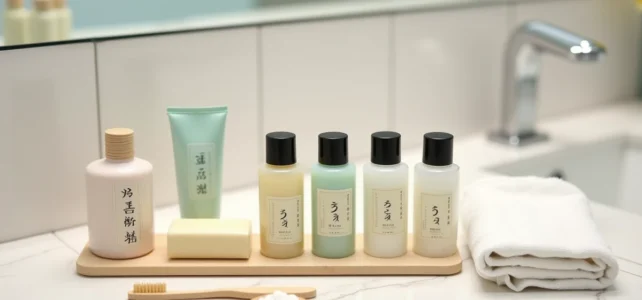
What toiletries can you actually find in a hotel room in Japan, and how does this seemingly trivial aspect reflect the positioning of the establishment? The question is worth asking: toiletries in Japanese hotels are not limited to a generic bottle of shampoo. They serve as a marker of quality, an indicator of hospitality philosophy, and sometimes a compelling reason for booking.
Washlet toilets in Japanese hotels: a standard that redefines hygiene
European travelers often discover washlet toilets for the first time in their hotel rooms in Japan. What is surprising is that this equipment is not reserved for luxury hotels. It can be found in the vast majority of establishments, including moderately priced business hotels.
The difference between ranges lies in the features. Basic models offer an adjustable water spray and a heated seat. High-end versions, found in luxury hotels, add drying, deodorization, night light, and saved user profiles. This level of sophistication is still considered premium in Europe, while it corresponds to the Japanese domestic standard.
A point rarely addressed in travel guides: manufacturers and health professionals (dermatologists, proctologists) recommend washing with water rather than wiping, especially for sensitive skin or certain digestive conditions. The sanitary experience in a Japanese hotel thus also has a concrete medical dimension. For more information on Voyage Univers, the topic is detailed from the perspective of choices offered by hotel range.
The ecological argument also weighs in: washlet toilets reduce toilet paper consumption by about three-quarters according to data provided by manufacturers. Fewer purchases, less waste, a lower environmental impact per stay.
Cosmetics provided by hotels: a comparative table by range
The nature and brand of cosmetics available vary significantly according to price positioning. This table summarizes the trends observed in Japanese hospitality.
| Hotel Range | Types of Products Provided | Brands or Positioning | Format |
|---|---|---|---|
| Budget (business hotel, capsule) | Shampoo, conditioner, liquid soap | Generic Japanese brands | Rechargeable wall dispensers |
| Mid-range (urban ryokan, 3-star chain) | Shampoo, conditioner, shower gel, lotion | Japanese skincare brands (Shiseido, Pola) | Individual bottles or dispensers |
| High-end and luxury | Complete range: shampoo, conditioner, shower gel, body lotion, facial cleanser, cotton pads | Prestigious Western brands (Aesop, Ferragamo) or exclusive lines | Individual bottles, sometimes gift sets |
The striking point: Japanese luxury hotels now display their cosmetic brands on their booking pages. This is no longer a discreet bonus; it is an assumed differentiation lever, on par with bedding or the view.
Japanese or Western cosmetics: what the choice reveals
A hotel that offers Shiseido or Pola products emphasizes the Japanese identity of skincare. These brands enjoy a solid reputation in cosmetics, with formulations often focused on hydration and gentleness.
Conversely, an establishment that selects Aesop or Ferragamo targets an international clientele accustomed to these references. The choice of cosmetic brand reflects a positioning strategy, not a logistical coincidence.
Free toiletries in Japanese hotels: what is included and what is not
The generosity of Japanese hotels regarding amenities (complimentary toiletries) is real, but it follows specific codes. Here’s what you most often find in the rooms:
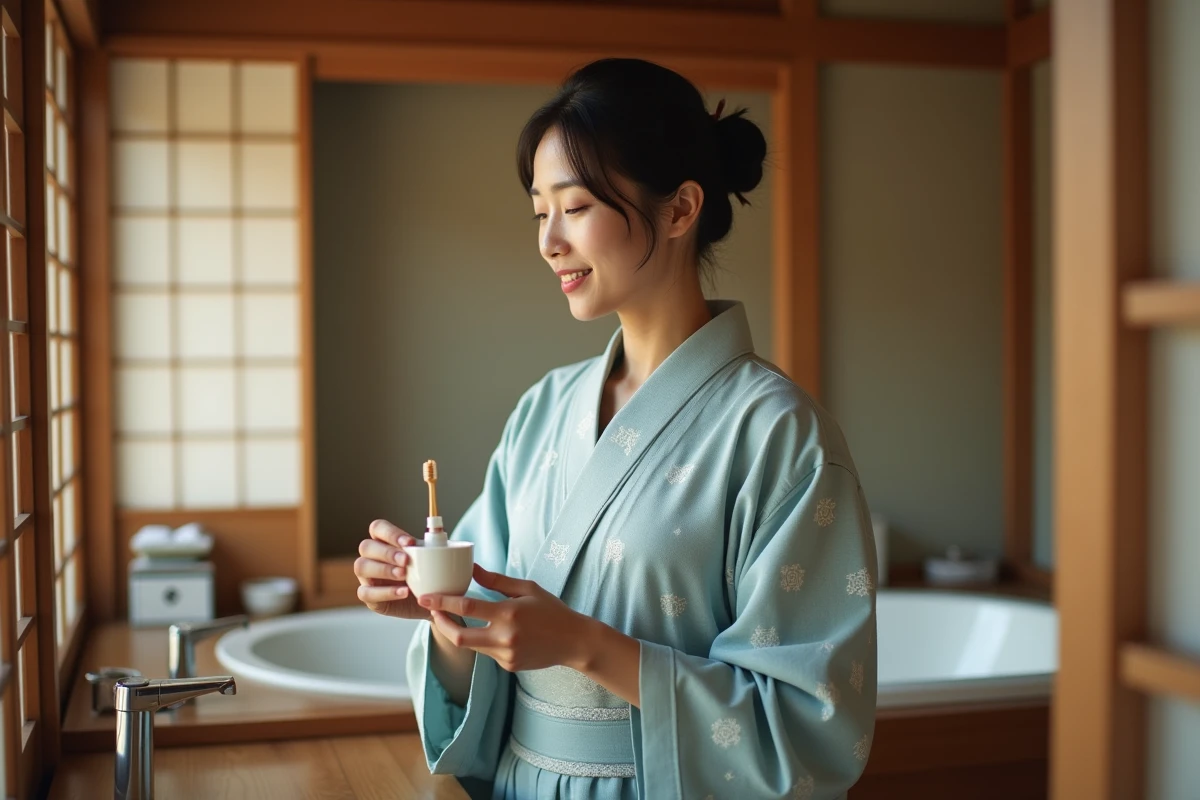
- Travel-sized toothbrush and toothpaste, systematically provided, even in budget establishments. This is a Japanese specificity that travelers used to European hotels notice immediately.
- Disposable razor, comb, shower cap, and cotton swabs, often grouped in a dedicated pouch or tray in the bathroom.
- Indoor pajamas or yukata, offered in the majority of ryokan and many chain hotels. This indoor garment is an integral part of the Japanese experience and is also worn in the common areas of ryokan.
On the other hand, sunscreens, deodorants, or specific hair products are almost never provided, regardless of the range. For these items, the local reflex is to visit a konbini (convenience store open 24/7) located near the hotel. The konbini network in Japan makes this solution quick and inexpensive.
Rechargeable dispensers vs. individual bottles: the ecological issue in Japanese hospitality
Budget and mid-range hotels have widely adopted rechargeable wall dispensers for shampoo and shower gel. This format reduces plastic waste compared to disposable mini-bottles and allows establishments to control their supply costs.
High-end hotels often retain individual bottles, perceived as more “luxurious” by guests. The dilemma between brand image and environmental responsibility thus plays out directly in this detail.
Some establishments adopt a compromise: elegantly designed rechargeable bottles with a strong visual identity, which maintain the impression of a premium product while limiting waste. The format of the container has become an indicator of the hotel’s environmental policy.
What travelers can anticipate in their suitcase
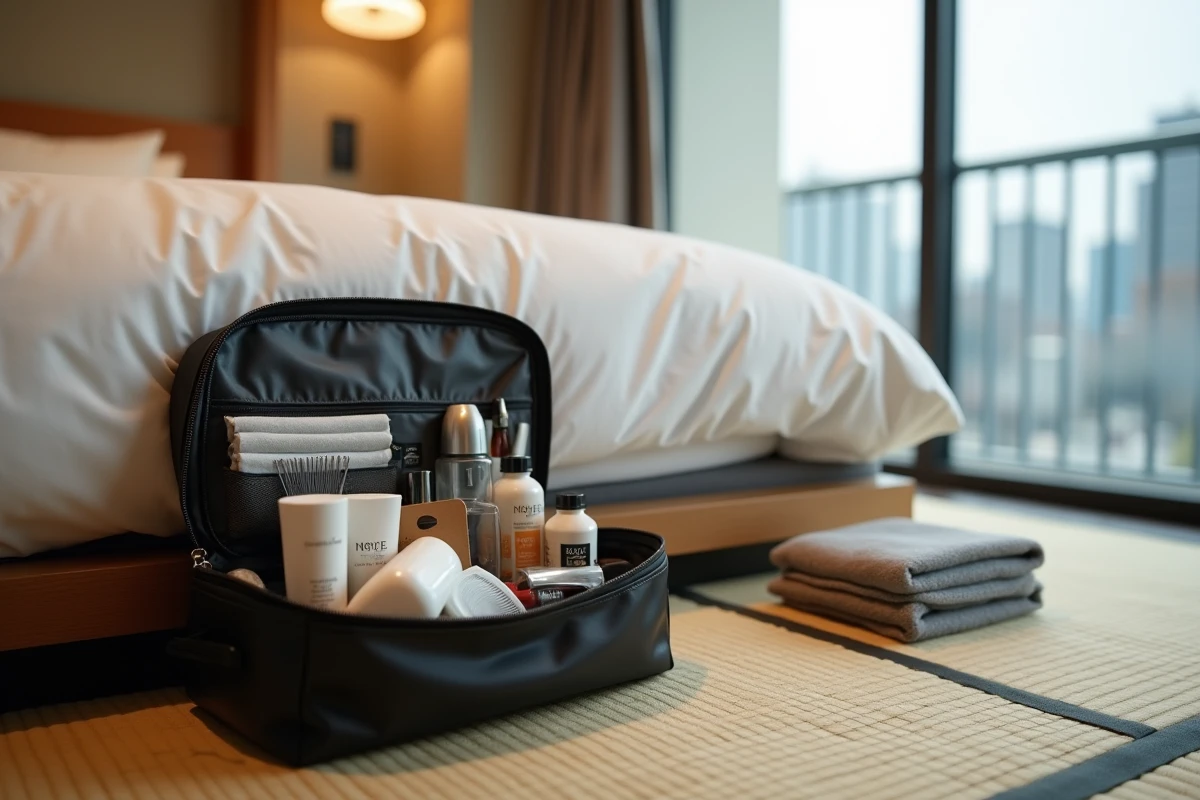
Given the richness of the provided items, it is often unnecessary to bring a toothbrush, toothpaste, or shampoo for a stay in Japan. The only products to slip into your bag are those related to specific dermatological needs or marked personal preferences (suitable hair care, prescription cream).
- Traveling light on cosmetics is possible thanks to the quality of Japanese amenities, even in the budget range.
- Konbini sell travel-sized versions of most Japanese skincare brands at very accessible prices.
- For stays in ryokan, check if a complete toiletry set is included in the rate, as this is often the case.
Toiletries in Japanese hotels are not a secondary detail. They reflect the care that the country puts into hospitality, from the simplest business hotel to the palace. The choice of cosmetic brand, the type of dispenser, the presence of a high-end washlet: each element tells something about the establishment. The informed traveler can use this as a selection criterion when booking.