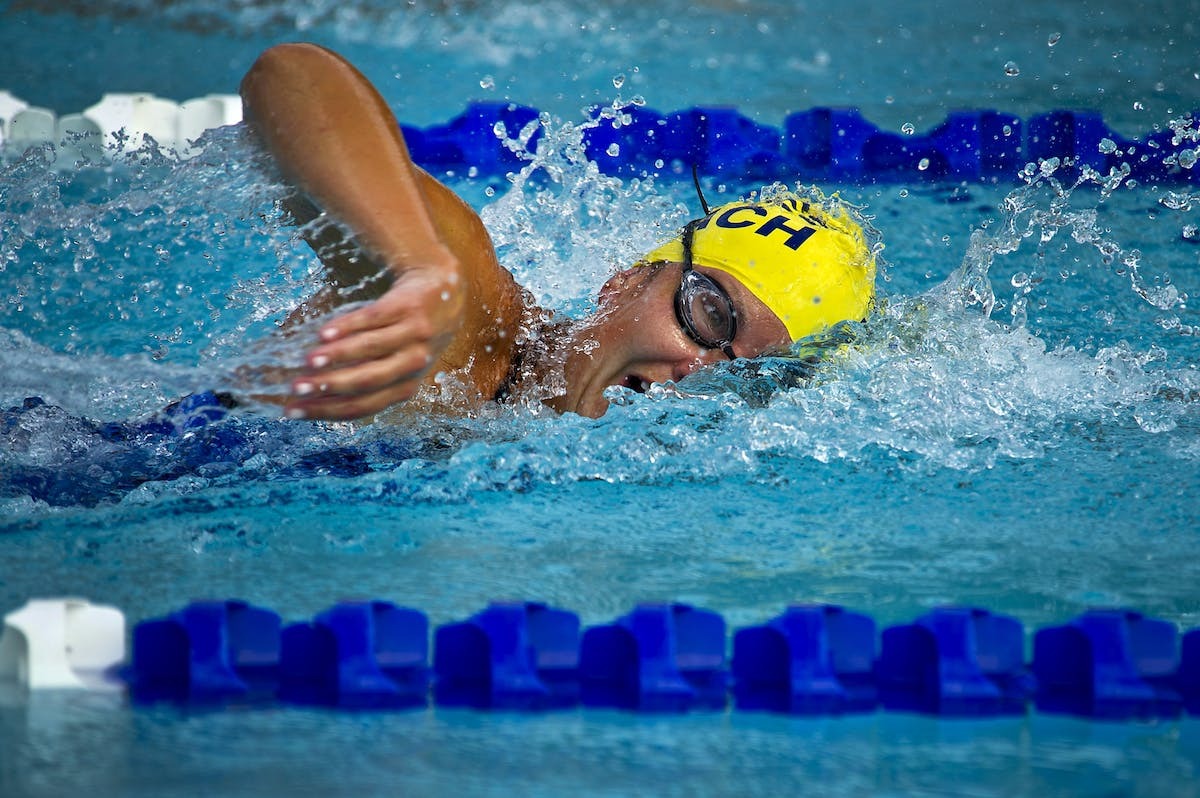
In the competitive field of swimming, observing average speed can provide valuable insight into athletes’ performances. This data, which can be influenced by factors such as swimming technique, endurance, and physical condition, is often used to evaluate a swimmer’s progress or to compare different competitors. By examining these average speeds in the context of national and international competitions, it is possible to draw conclusions about trends and standards within this sport. A thorough study of these average speeds can therefore prove to be both interesting and informative.
The competitive swimming disciplines: what are they
In the world of competitive swimming, there are different disciplines that test swimmers and their physical abilities. The average competition swimming speed varies according to these disciplines, making each event unique.
The first discipline is freestyle, also known as crawl. Athletes use a powerful technique to propel themselves through the water with an alternating movement of arms and legs. This technique allows for impressive speeds and improves the average competition swimming speed.
The second discipline is breaststroke, characterized by a symmetrical arm movement accompanied by a synchronized leg kick. Although this technique is slower than freestyle, swimmers can still maintain a good average speed thanks to their smooth coordination.
Next is the backstroke discipline, where athletes move on their backs using an alternating arm movement while undulating their bodies. Even though this may seem less effective for achieving high speeds, some swimmers are capable of maintaining a good rhythm thanks to their developed muscle strength.
We have the butterfly discipline, which requires great physical strength as well as precise coordination between upper and lower body movements. With its powerful simultaneous arm movements and vigorous leg kicks, this technique allows the best swimmers to achieve a high average speed when they launch into the water.
Each discipline has its specifics and challenges, but all require swimmers to have a high average competition swimming speed to achieve the best results. Speed records in swimming are regularly broken, reflecting the constant progress made by athletes in their quest for optimal performance. To improve their speed, swimmers work on various techniques such as mastering arm and leg movements, optimizing breathing, and specific muscle strengthening for each discipline.
It is interesting to note that some differences exist between the average speeds achieved by men and women. Generally, it is observed that men tend to have greater physical power, which often allows them to reach speeds higher than those of women. It should be emphasized that some women are capable of matching or even surpassing certain men due to their natural talent combined with intensive training.
Over the years, a clear evolution in average competition swimming speed has been observed. This progression can be attributed to technological advancements, particularly with the introduction of specialized swimsuits that increase buoyancy and reduce resistance in the water. The continuous improvement of training methods allows athletes to maximize their physical capabilities.
Analyzing the average competition swimming speed gives us valuable insight into swimmers’ performances. By observing the different disciplines, speed records, and evolution over time, we can better understand the factors that influence this speed and appreciate the dedication and perseverance of athletes in their quest for excellence.
<img src='
Warning: curl_setopt(): Filename cannot be empty in /home/dyez/public_html/upload.php on line 54
Warning: curl_exec(): Filename cannot be empty in /home/dyez/public_html/upload.php on line 55
Warning: curl_exec(): Filename cannot be empty in /home/dyez/public_html/upload.php on line 55
Warning: curl_exec(): Filename cannot be empty in /home/dyez/public_html/upload.php on line 55
Warning: curl_exec(): Filename cannot be empty in /home/dyez/public_html/upload.php on line 55
Error: Unable to upload image’ width=’800px’ alt=’competition swimmer’>
Factors that impact swimming speed: an in-depth analysis
The competition swimming speed is influenced by various factors that play a key role in swimmers’ performances. Among these factors are swimming technique, muscle strength, endurance, coordination, and even the morphology of the swimmer.
The swimming technique plays a crucial role in improving average speed. A good technique allows swimmers to use their energy more efficiently and reduce drag with the water. Precise and fluid movements are essential to maximize each arm stroke and leg kick.
Muscle strength has a significant impact on speed. Powerful muscles allow swimmers to exert greater force during propulsive movements, leading to a substantial increase in their power in the water. Regular strength training is often integrated into athletes’ training to improve their overall strength.
Endurance is also a determining factor for maintaining high speed throughout a race. The best swimmers possess exceptional cardiorespiratory capacity that allows them not only to have enough energy to maintain the pace throughout the course but also to recover quickly between sets or successive races.
Coordination between upper and lower body movements is also important in developing a good average speed in swimming. Adequate synchronization allows for optimal use of muscle strength and better propulsion in the water. Swimmers must develop this coordination through specific exercises, such as undulation movements or arm drills.
The morphology of the swimmer can also influence their average speed. The length of the arms, legs, and torso, as well as the ratio between them, can play a role in swimming efficiency. For example, longer arms can generate greater reach during propulsive movements, while good buoyancy due to a certain proportion of body fat can help reduce resistance in the water.
It should be emphasized that these factors are not independent of one another. They interact and complement each other to positively or negatively influence the average competition swimming speed. The best athletes work on all these aspects to improve their overall performance.
Several elements contribute to determining the average competition swimming speed among athletes.
Swimming speed records: how far can athletes go
Swimming speed records are dazzling testimonies of human capabilities to push physical limits and achieve remarkable performances. These records are often set during international competitions, where the best swimmers in the world gather to compete in an ongoing quest for improvement.
The current world record for the 100 meters freestyle is held by Caeleb Dressel, an American swimmer who accomplished the feat of reaching the finish line in just a few seconds. This incredible performance demonstrates the phenomenal speed that some athletes can achieve through their rigorous training and natural talent.
In the women’s category, it is Sarah Sjöström, an exceptional Swede, who holds the world record for the 100 meters freestyle with an astonishing time of 51 seconds.
Swimming: men vs women who is faster
Differences in speed between men and women often spark debates in the field of swimming. While each swimmer is unique, there is generally a disparity in terms of timed performances based on gender.
Indeed, studies have shown that, on average, men are faster than women in all swimming disciplines. This difference can be attributed to several physiological and anatomical factors.
Morphology plays a fundamental role. Men tend to have a different body structure than women with broader shoulders and a developed torso. These characteristics favor the range of arm movement during swimming and allow men to generate more propulsive power.
There is also a significant difference at the hormonal level. Men naturally produce more testosterone, which is linked to muscle development and increased metabolic rate. This results in greater muscle mass in men, giving them an undeniable physical advantage in the water.