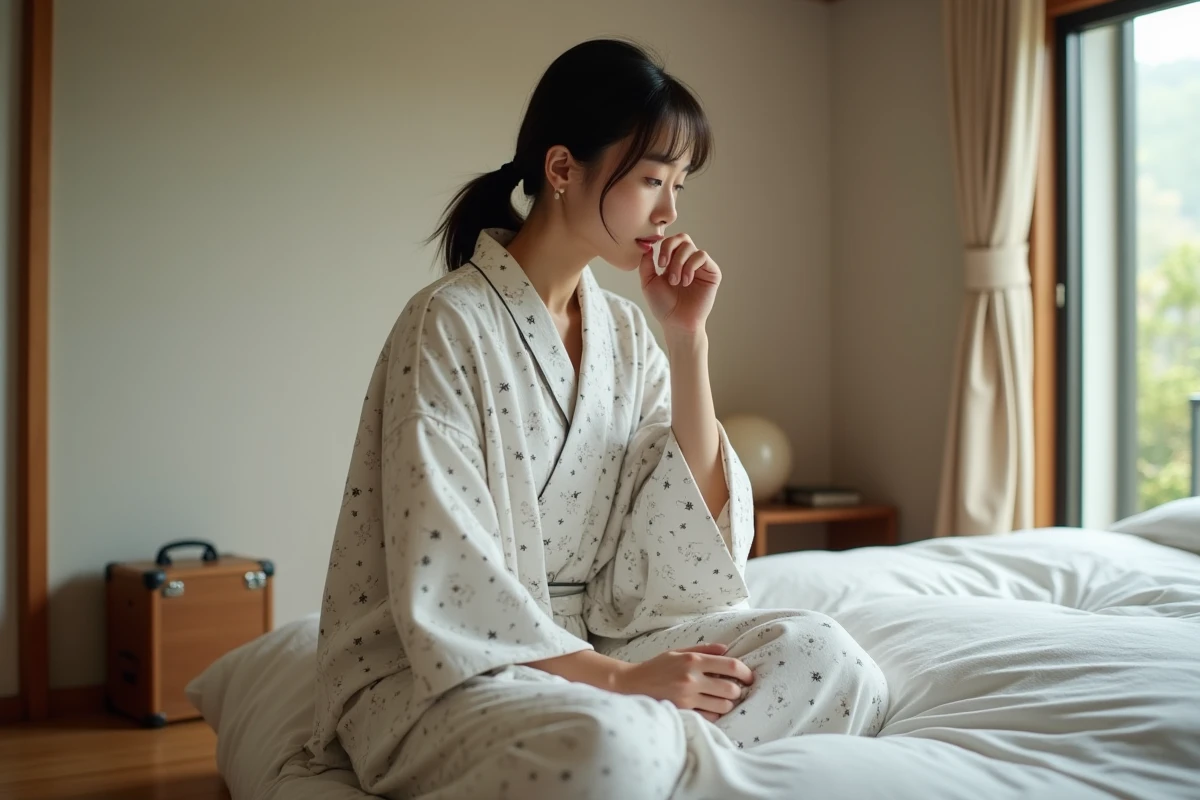
Keep your pajamas, but also leave them. This paradoxical injunction raises an eyebrow for more than one globetrotter, especially when it comes to a stay in a Japanese hotel.
In many hotels in Japan, a pajama set patiently awaits on the bed, next to slippers and toothbrushes. But while these accessories are designed for single use, pajamas are subject to specific rules that vary from one establishment to another.
Some chains clearly state that pajamas must remain in the room. Others, particularly among capsule hotels or budget accommodations, are more flexible: sometimes, the garment is marked “to take away.” It can be difficult to navigate, and the question frequently arises in discussions among travelers.
The Place of Pajamas in Japanese Hospitality Culture: Between Tradition and Comfort
In Japan, pajamas are not just a simple nightwear. They are part of a continuity of comfort and hospitality, inherited from the customs of ryokan and adapted to today’s hotels. From the moment of arrival, the hotel room transforms into a refuge: Western bathrobe or light kimono, everything invites relaxation, respecting a tradition where each night resembles a ritual.
The presence of pajamas reflects a desire to go further into detail: to offer the visitor a tailor-made interlude, true to the spirit of Japanese hospitality. Wearing this garment, even for just one night, is a discreet immersion into local life. The models offered are often understated, well-maintained, never flashy; comfort here is subtle.
This attention to detail distinguishes each stay, whether in a hotel or a ryokan. The idea is to allow the traveler to settle in effortlessly, to feel Japan even in the softness of nightwear. But knowing whether one can leave with these pajamas is never straightforward. The article keeping pajamas in Japanese hotels sheds light on the subject: the rule is never absolute, and nuance prevails. Whether borrowed or gifted, pajamas remain a strong symbol: that of a welcome where tradition meets today’s comfort.
Can You Really Leave with the Pajamas Offered in Japanese Hotels?
From the alleys of Kyoto to the streets of Tokyo, a question resurfaces: can you leave with the pajamas provided in a Japanese hotel room? The reality, true to the Japanese spirit, lies in the details: it all depends on the place and the context.
In the vast majority of hotels, pajamas are not a souvenir to take home. They are a temporary service, designed for comfort on-site: the garment must therefore remain in the room at the end of the stay. Here, the logic is clear: pajamas are part of the decor; they are not meant to travel.
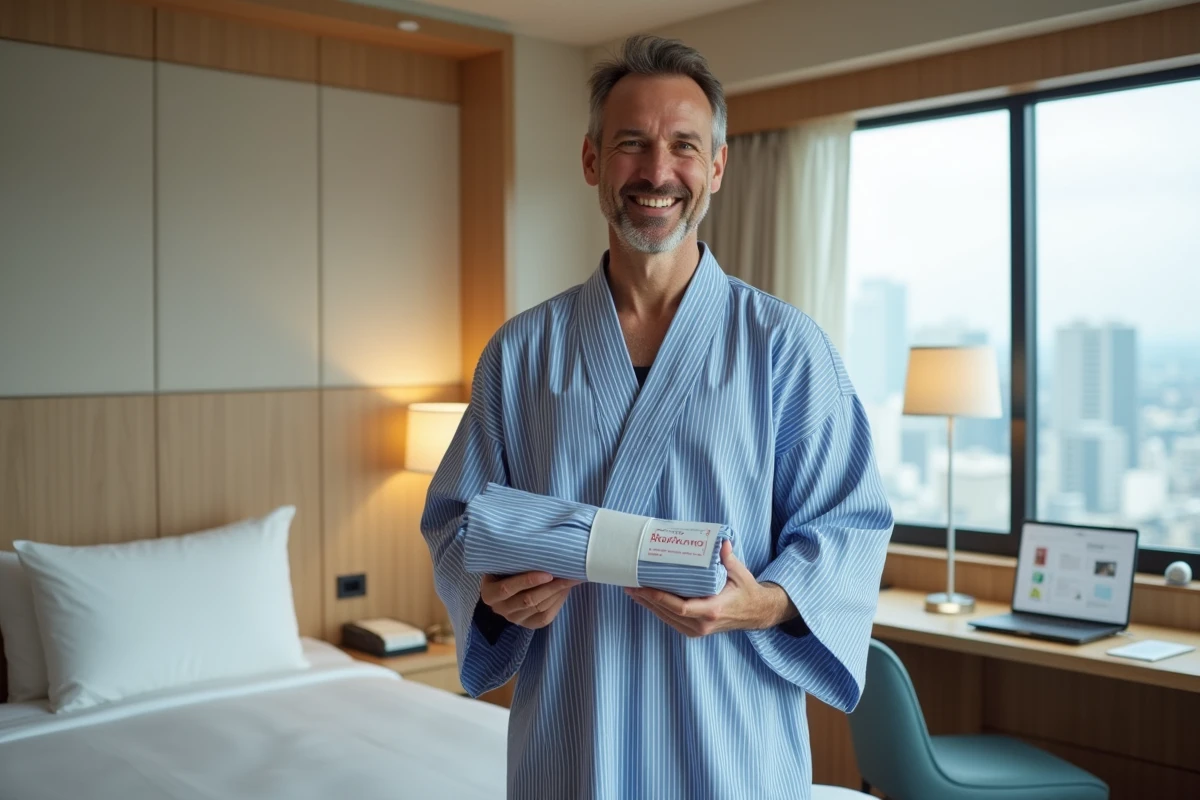
That said, some places are exceptions. A few high-end hotels or charming establishments sometimes offer these pajamas as a gift, but the intention is always explicitly stated. A tag, a card, or a note at the reception clarifies the matter: in this specific case, the pajamas change status and become an official souvenir of the stay.
To better understand the practices according to the establishments, here’s what to remember:
- Generally, in classic hotels, pajamas must be left on-site.
- In some higher-end hotels, they may be offered, but this is always mentioned unambiguously.
It’s best to consult the information available in the room or ask directly at the reception. Practices vary, and respecting these codes is a mark of consideration expected in Japan, even for a simple pajama.
What Travelers Should Know According to the Type of Accommodation: Classic Hotels, Ryokan, and Capsules
Practices differ according to the type of accommodation. In traditional hotels, pajamas, often a simple shirt or yukata, function as a loan. The garment, carefully prepared, awaits the guest upon arrival: it must be left in the room at the time of departure, to be washed and then offered to the next visitor. This principle prevails in the overwhelming majority of classic hotels.
In ryokan, the quintessential Japanese inn, the yukata holds a special place. It accompanies baths and moments of relaxation in common areas. Again, the code is clear: pajamas do not leave the establishment. However, some places offer models for sale, often upon request.
In capsule hotels, symbols of modern and efficient hospitality, pajamas serve the same function: comfort and hygiene, but not as a gift. They are washed daily and must be returned before leaving.
Here’s an overview of the practices according to the type of accommodation:
- Classic hotels: pajamas to be left on-site.
- Ryokan: use reserved for the premises of the establishment.
- Capsules: garment provided for the night, never to be taken away.
Each type of accommodation in Japan imposes its own protocol regarding pajamas. But from Tokyo to Fukuoka, the rule remains the same: this garment accompanies an experience; it does not extend the journey beyond the walls of the hotel. Enjoy this attention to detail for the duration of one night, before returning to the Japanese asphalt.