
Leaving your dog or cat hospitalized at the veterinarian raises a question that few owners dare to ask: what really happens at night when the clinic closes its doors? Between general practices where no staff remains on-site and intensive care centers equipped with connected monitoring, the conditions for housing and monitoring hospitalized animals vary significantly from one facility to another.
General practice or emergency center: two levels of monitoring at night

The most determining distinction for a hospitalized animal does not concern the type of cage or the quality of the food. It relates to the presence or absence of staff during the night.
| Criteria | General practice/clinic | Emergency or intensive care center |
|---|---|---|
| Nocturnal human presence | None in most cases | Team on-site continuously |
| Monitoring of vital signs | Checked at the end of the day, resumed in the morning | Real-time monitoring (heart rate, temperature, infusions) |
| Responsiveness in case of complications | Intervention upon staff return | Immediate intervention |
| Hospitalization cost | Lower | Significantly more expensive |
| Species separation | Variable, often limited by space | Distinct areas for dogs/cats, sometimes infectious/non-infectious |
A general practice typically does not have staff on-site at night. The animal remains alone in its cage or box until the next morning. This operation is common and poses no problem for stable cases, but it involves a real risk if the animal’s condition deteriorates between visits.
For owners who want to understand what a night at the veterinarian is like on Espace Animaux, this difference between general practice and emergency center remains the first parameter to clarify with the care team.
Veterinary telemonitoring and connected monitoring: what changes for hospitalized animals
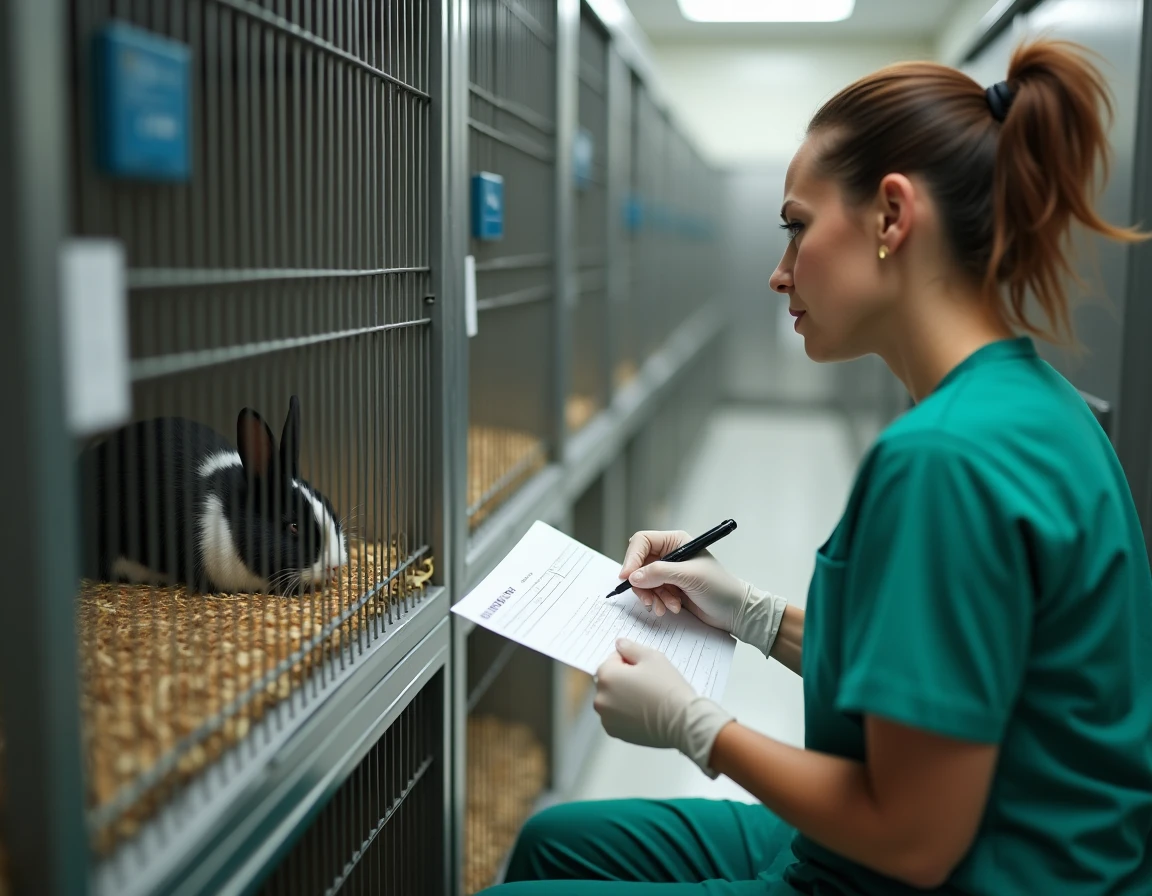
Since the early 2020s, European clinics have adopted real-time video surveillance systems in the kennels and catteries of hospitalization. Continuous recording allows for tracing events in case of an incident, a practice directly inspired by human hospital protocols.
Beyond the camera, some facilities implement delegated monitoring via connected devices. Body temperature, heart rate, infusion rate, analgesia pumps: these vital signs are monitored by sensors that send alerts to the veterinarian or the on-call assistant at home.
This hybrid system avoids the need for continuous human presence on-site while maintaining a high level of vigilance. The on-call system means that a professional can intervene quickly if an alert is triggered, without having to remain physically in the clinic all night.
Limitations of telemonitoring
A connected monitor detects a drop in heart rate or a stop in infusion. It does not detect an animal injuring itself against the bars of its cage, nor a cat pulling out its urinary catheter. Technology complements human monitoring; it does not replace it.
Species separation and stress management in veterinary hospitalization
Feedback from clinics shared on professional networks between 2023 and 2025 shows an increasingly strict separation of hospitalization areas. This organization goes beyond simple dog/cat division.
- Distinct areas isolate infectious animals from non-infectious patients to limit cross-contamination in a confined space
- Soundproof boxes are reserved for very anxious or aggressive animals to reduce stress that hinders recovery
- Some facilities create “calm” kennels with dim lighting and reduced ambient noise, separated from active care areas
A cat hospitalized in the same room as a dog barking all night experiences stress that directly complicates its recovery. Therefore, the design of the premises influences the quality of the stay as much as the care itself.
What the owner can check before hospitalization
Asking three simple questions to the veterinary team helps assess the housing conditions:
- Is a staff member present on-site at night, or will the animal be alone until morning?
- Are dogs and cats housed in separate rooms?
- Is there a monitoring or video surveillance system in place for hospitalized patients?
These questions are not intrusive. They help to choose between the usual practice and a better-equipped center if the animal’s condition warrants it.
Cost of hospitalization and decision-making for the owner
The choice between a general practice and an emergency center open continuously is also a financial decision. Hospitalization in a facility with permanent nocturnal monitoring costs significantly more than a stay in a practice where the animal spends the night alone.
For a stable animal after routine surgery (spaying, removal of a benign mass), the general practice provides a sufficient setting in most cases. However, for a critically ill patient (digestive emergency, polytrauma, acute kidney failure), the absence of nocturnal monitoring represents a real risk.
Geographical distance also weighs into the decision. Some owners live more than two hours from the nearest emergency center. The transfer is not always feasible, and the treating veterinarian adapts their protocol accordingly, with closer monitoring in the late evening and early morning.
The difference between the two types of facilities does not lie in the competence of the teams. It lies in the material and human resources available outside of opening hours. Identifying this distinction before hospitalization allows for making a decision appropriate to the severity of the situation, without surprises or guilt.